
Golf Club Management
Lesson 1: The contemporary golf club and the Director of Golf
Goal: describe what kind of organisation a golf club is, explain how its operating environment has changed, and place the Director of Golf role inside the club’s management system.
What kind of organisation is a golf club?
Most private golf clubs in South Africa are member-owned, not-for-profit organisations. Legally a club is usually either a non-profit company (NPC) under the Companies Act 71 of 2008, governed by a memorandum of incorporation (MOI), or a voluntary association with its own constitution, recognised at common law as a separate legal person (a universitas) if its constitution provides for perpetual succession and for property to be held apart from its members. Many clubs are also approved by SARS as recreational clubs under section 30A of the Income Tax Act 58 of 1962. That gives them partial exemption from tax on subscriptions and on some trading income, provided they keep to the section’s conditions.
That legal form shapes everything else:
- The owners are also the customers. Members pay subscriptions, elect the board and use the product. Cornforth (2004) calls this a basic tension in mutual organisations: the same people judge the club as owners (is it sound for the long term?) and as users (is my Saturday tee time and my boerewors roll good?).
- There is no share price. Surplus is reinvested, so “performance” has to be defined some other way: member numbers and retention, course condition, financial reserves, satisfaction, transformation progress.
- Volunteers govern, professionals manage. An elected board or committee oversees a business that, at a large Gauteng or Western Cape club, turns over tens of millions of rand a year.
Not every club fits this model. There are also golf estates (where the club sits inside a residential estate and the homeowners’ association is a major stakeholder), proprietary and resort courses run for profit, municipal courses on leased land, and a growing off-course sector (driving ranges, simulators, entertainment venues). A Director of Golf may work in any of them, and the management system differs in each.
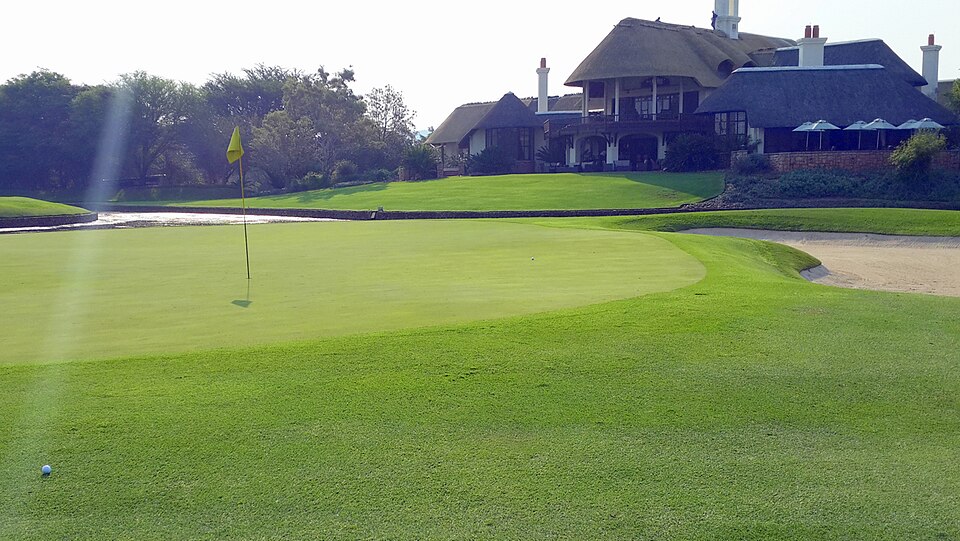

The South African golf environment
Some figures to anchor the picture:
- GolfRSA, the controlling body for amateur golf, has 439 affiliated clubs and about 128,000 affiliated golfers (GolfRSA, 2026). Industry data.
- Handicaps Network Africa (HNA) runs the official handicap system for more than 140,000 golfers. In early 2026 it moved to a new platform built by DotGolf, which is owned by The R&A and Golf New Zealand (Lesson 14).
- Globally, The R&A counts 108 million golfers across its markets (excluding the USA and Mexico). 43.3 million of them play 9 or 18 holes on a course, and 8.4 million hold a registered handicap. Most new golfers start off-course, and 80% of juniors play non-traditional formats (The R&A, 2025). Industry data.
- South Africa has a world profile out of proportion to its golfer numbers. Venues such as Royal Johannesburg & Kensington, Houghton, Glendower, Durban Country Club, Leopard Creek and the Gary Player Country Club at Sun City have hosted the SA Open, the Alfred Dunhill Championship, the Joburg Open and the Nedbank Golf Challenge, all broadcast worldwide. Hosting a televised event is a major management project in its own right (Lesson 10).
The pressures on South African clubs are particular:
- Utilities: load-shedding and steep electricity tariff increases, and in Gauteng a water supply under real strain (Lesson 12).
- Security: perimeter security, armed robbery on courses and in car parks, and the cost of guarding are a standing budget line most overseas clubs don’t have.
- Transformation: B-BBEE, employment equity targets and GolfRSA’s transformation and Women in Golf commitments (Lessons 7 and 11).
- Economy: cost-of-living pressure on subscriptions, a weak rand making imported machinery, chemicals and golf equipment expensive, and competition from estates and leisure venues.
Where the Director of Golf fits
Titles vary from club to club, which causes real confusion. A typical structure has:
- The board (or management committee), elected by members, which governs.
- A general manager or CEO, employed by the board, who manages the whole operation.
- Department heads reporting to the GM: the course superintendent, food and beverage or the clubhouse manager, finance and administration, membership and marketing, and golf operations.
The Director of Golf is usually the head of golf operations. That covers the tee sheet, competitions and handicapping, the pro shop, coaching, golf events, caddies and member golf services. At some clubs the Director of Golf is a PGA professional who leases the pro shop and runs it as their own business; at others they are a salaried employee. Some large clubs combine the role with the GM role.

The Club Management Association of America’s General Manager / Chief Operating Officer (GM/COO) concept, taught in South Africa through the Club Management Association of Southern Africa (CMASA), argues for one professional manager with authority over every department, golf included, reporting to the board. The argument is that splitting authority between several department heads who each report to a different committee creates silos and lets directors manage around the GM. Whether or not your club uses that model, the Director of Golf needs to understand it, because candidates for senior roles are increasingly judged on whole-of-club management rather than golf expertise alone.
What managers actually do
Mintzberg’s (1973) study of managers at work found that they don’t spend their days planning, organising and controlling in tidy blocks. Their work is fragmented, verbal and constantly interrupted. He grouped what they do into ten roles in three clusters: interpersonal (figurehead, leader, liaison), informational (monitor, disseminator, spokesperson) and decisional (entrepreneur, disturbance handler, resource allocator, negotiator).
A Director of Golf on a Saturday morning is a disturbance handler (a slow round, a rules dispute, a lightning siren) and a figurehead (presentations). On Tuesday at the budget meeting they are a resource allocator and negotiator. During a televised tournament week they are a liaison with the tour, broadcasters and sponsors. Mintzberg’s point is that management competence includes juggling these roles. It is not only technical skill.
Evidence: some evidence. Mintzberg’s observation-based findings have been broadly replicated, though his ten roles are a classification, not a tested theory.
In the clubhouse
A common pattern is a board member who chairs the golf committee and gives instructions to golf staff directly, around the GM. It feels helpful to the director, but it undermines the GM and leaves staff with two bosses. Lesson 2 deals with this properly.
Critical view
- Most club management writing is practitioner material (textbooks, association guides and consultants’ reports). There is a peer-reviewed literature on sport governance, on community sport clubs and on golf’s environmental and gender issues, but very little on golf club management specifically, and less again on South African clubs. You’ll often need to apply general management and sport management research to golf and argue why it transfers.
- Participation figures come from golf’s own governing bodies, which have an interest in good news. Look at how “golfer” is defined: affiliated golfers, handicap holders and “anyone who played any form of golf” are very different numbers.
Seminar questions
- If members are both owners and customers, whose interests should a GM put first when they conflict? Use Cornforth’s paradox perspective.
- Which pressures on South African clubs (utilities, security, transformation, economy) would you rank highest for your club, and why?
- Should a Director of Golf report to the GM, or directly to the board? Argue both sides.
Workplace task 1
Draw your club’s organisation chart as it actually works, not as it is printed: who really gives instructions to whom? Mark every line where a board member or committee deals directly with staff. Keep this chart for Lesson 2.
Watch
- Henry Mintzberg on Leading, Managing and Strategizing (IESE Business School)
Sources
- Cornforth (2004), The governance of cooperatives and mutual associations: a paradox perspective, Annals of Public and Cooperative Economics
- Mintzberg (1973), The Nature of Managerial Work, Harper and Row
- Breitbarth, Kaiser-Jovy and Dickson (eds) (2017), Golf Business and Management: A Global Introduction, Routledge, especially Dickson, Golf club management and hospitality
- GolfRSA, Affiliated golfers and HNA update: migrated handicap stable
- The R&A (2025), Over 100 million golfers in R&A markets
- SARS, Tax Exemption Guide for Recreational Clubs
- Club Management Association of Southern Africa, Education; Club Management Association of America, General Manager / Chief Operating Officer concept
Draft module material for the PGA of South Africa Director of Golf certificate, for discussion. South African law applies throughout. It is general education, not legal or financial advice: Acts, regulations and codes change, so check the current version and take advice before acting on them.