
Golf Club Management
Lesson 12: Environment, sustainability and ESG
Goal: assess a golf club’s environmental impacts and opportunities, write the outline of a water management strategy, and evaluate the business case for renewable energy.
Golf and the environment: both sides
Golf courses are large, managed landscapes, and the research shows both harm and benefit:
- Wheeler and Nauright (2006) set out the global critique: water use in dry regions, chemical runoff, loss of natural habitat during construction, and courses built for tourism and real estate with little regard for local communities.
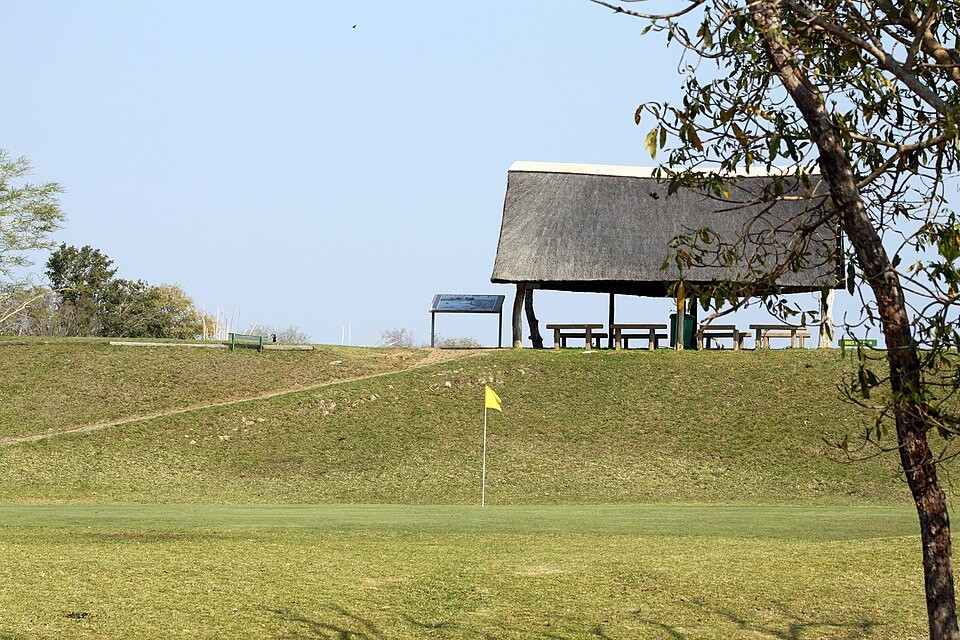
- Petrosillo et al. (2019) found that golf courses can support biodiversity and ecosystem services, but that this depends heavily on the surrounding landscape and how the course is managed. In an intensive farming or urban area, a well-managed course with native rough and wetlands can be a refuge. In a natural landscape, it’s a loss.
- Millington and Wilson (2016) trace how golf has presented itself as environmentally friendly, and warn that sustainability claims can become public relations unless they’re measured and verified.
Evidence: mixed evidence. The impact depends on location, design and management, which is exactly why management matters.
.jpg)
ESG and the triple bottom line
ESG (environmental, social, governance) is the language investors and lenders use; the triple bottom line (people, planet, profit; Elkington, 1997) is an older framing of the same idea. For a club:
- Environmental: water, energy, chemicals, waste, biodiversity, climate resilience.
- Social: inclusion, community access, staff wellbeing, junior programmes, safeguarding.
- Governance: board quality, ethics, transparency, risk management (Lessons 2 and 11).
Why it matters to a club: banks increasingly ask about climate risk before lending for a clubhouse; councils ask about it when renewing leases; younger members ask about it before joining; and King V in South Africa expects governing bodies to oversee sustainability and climate risk.
Water management strategy
Water is the club’s most critical environmental resource, and in South Africa it is under pressure from both climate and failing municipal supply. Cape Town came close to “Day Zero” in 2018. In Johannesburg, Rand Water began cutting its supply to the city in December 2024, and the city has repeatedly imposed restrictions on garden irrigation. A club that depends on municipal water can lose its course in one dry season. A water management strategy covers:
- Audit: how much water the course uses (megalitres per year), where it comes from, and where it goes. Meter every source.
- Sources and security: municipal (potable) water is the most expensive and the first to be restricted. Alternatives include treated effluent from a municipal wastewater works, stormwater harvesting into dams, and boreholes. Under the National Water Act 36 of 1998, taking groundwater or storing water is a water use that must be covered by a general authorisation, registration or a licence from the Department of Water and Sanitation, and restrictions can also limit outdoor use of borehole water. Many Highveld clubs now combine boreholes, effluent and storage so that no single source can stop irrigation.
- Demand reduction: irrigate less area (reduce irrigated rough), use drought-tolerant turf, add soil moisture sensors and weather-based scheduling, and upgrade irrigation heads and controls.
- Risk: recycled water brings its own risks, such as salinity, nutrients and public health. Salgot, Priestley and Folch (2012) treat reclaimed water use on golf courses as a risk management problem needing monitoring and controls.
- Targets and reporting: for example, a percentage reduction in potable water per hectare, or 100% non-potable irrigation by a given year.
Ortuño, Hernández and Civera (2015) studied golf courses in dry southern Spain and found that courses designed around water self-sufficiency (their own recycled and stored water) were far more resilient. The R&A’s Golf Course 2030 programme provides a free water portal to help clubs benchmark and plan their water use.


Pollution and the duty of care
Section 28 of the National Environmental Management Act 107 of 1998 (NEMA) places a duty of care on anyone who causes, or may cause, significant pollution or degradation of the environment: they must take reasonable measures to prevent it, or to minimise and remedy it. For a golf course that covers fertiliser and pesticide runoff into streams and wetlands, fuel and oil from the workshop, and the washing of machinery. Responsible people can be held personally liable. Practical controls include buffer zones without spraying next to water, a bunded chemical store and wash bay, and spray records. Use only products registered for turf, applied as the label says.
Solar and energy
The business case for solar at a golf club rests on large roof or car park areas, daytime demand (kitchens, refrigeration, pumps, cart charging), and rising grid prices. In South Africa load-shedding adds a resilience argument.
- Royal Johannesburg and Kensington Golf Club built a solar carport and battery microgrid producing about 400 MWh a year, aiming for 50 to 60% independence from the grid and projecting savings of around R21 million over a 20-year power purchase agreement. Under a PPA, the provider funds, owns and maintains the system and sells the power to the club at an agreed rate.
- Smaller clubs can start with rooftop solar over the clubhouse or workshop and a battery sized to keep the kitchen, refrigeration, tills, security systems and irrigation controls running through an outage, which cuts diesel use as well as grid cost.
Funding models include outright purchase, a loan, a lease, or a power purchase agreement (a provider installs and owns the system and sells the power to the club at an agreed rate). Evaluate them by net present value, payback, risk and who owns the asset at the end. Benefits extend beyond cost: emissions reductions, resilience, member and council goodwill.
Programmes and certification
- GEO Foundation for Sustainable Golf: its OnCourse programme guides and records a club’s sustainability actions across more than 100 best-practice topics, from water and energy to biodiversity and community. GEO Certified status is awarded after independent verification.
- The R&A, Golf Course 2030: research, guidance and tools on sustainable agronomy, resources, biodiversity and climate.
- ISO 14001: the environmental management system standard. More demanding, and used by some larger clubs and resort operators.
Critical view
- Certification can become a badge that hides a lack of real change. Look at measured results (water, energy, chemical use) over time.
- Some “sustainability” changes cut against member expectations of perfect green conditions. The strategy needs culture work (Lesson 7) and good communication, not just agronomy.
Seminar questions
- Is golf an environmental problem or an environmental opportunity? Use Wheeler and Nauright, and Petrosillo et al.
- Should a club accept browner fairways in summer to cut water use? How would you get members to agree?
- A club can buy a solar system outright, borrow to buy it, or sign a PPA. Which would you recommend for your club, and why?
Workplace task 12
Find your club’s water sources and annual use (ask the course superintendent). Write a one-page water management strategy outline using the five headings above, with one target for each.
Sources
- Elkington (1997), Cannibals with Forks: The Triple Bottom Line of 21st Century Business, Capstone
- Millington and Wilson (2016), The Greening of Golf: Sport, Globalization and the Environment, Manchester University Press
- Nguyen (2017), Sustainability and environmental impact of golf, in Golf Business and Management, Routledge
- Ortuño, Hernández and Civera (2015), Golf course irrigation and self-sufficiency water in Southern Spain, Land Use Policy
- Petrosillo et al. (2019), Can a golf course support biodiversity and ecosystem services?, Landscape Ecology
- Salgot, Priestley and Folch (2012), Golf course irrigation with reclaimed water in the Mediterranean: a risk management matter, Water
- Wheeler and Nauright (2006), A global perspective on the environmental impact of golf, Sport in Society
- GEO Foundation for Sustainable Golf, OnCourse
- The R&A, Golf Course 2030 and the GC2030 water portal
- Engineering News (2024), Leading Johannesburg golf club has implemented solar power system
- Daily Maverick (2024), Johannesburg’s water restrictions set to tighten further as crisis deepens
Draft module material for the PGA of South Africa Director of Golf certificate, for discussion. South African law applies throughout. It is general education, not legal or financial advice: Acts, regulations and codes change, so check the current version and take advice before acting on them.